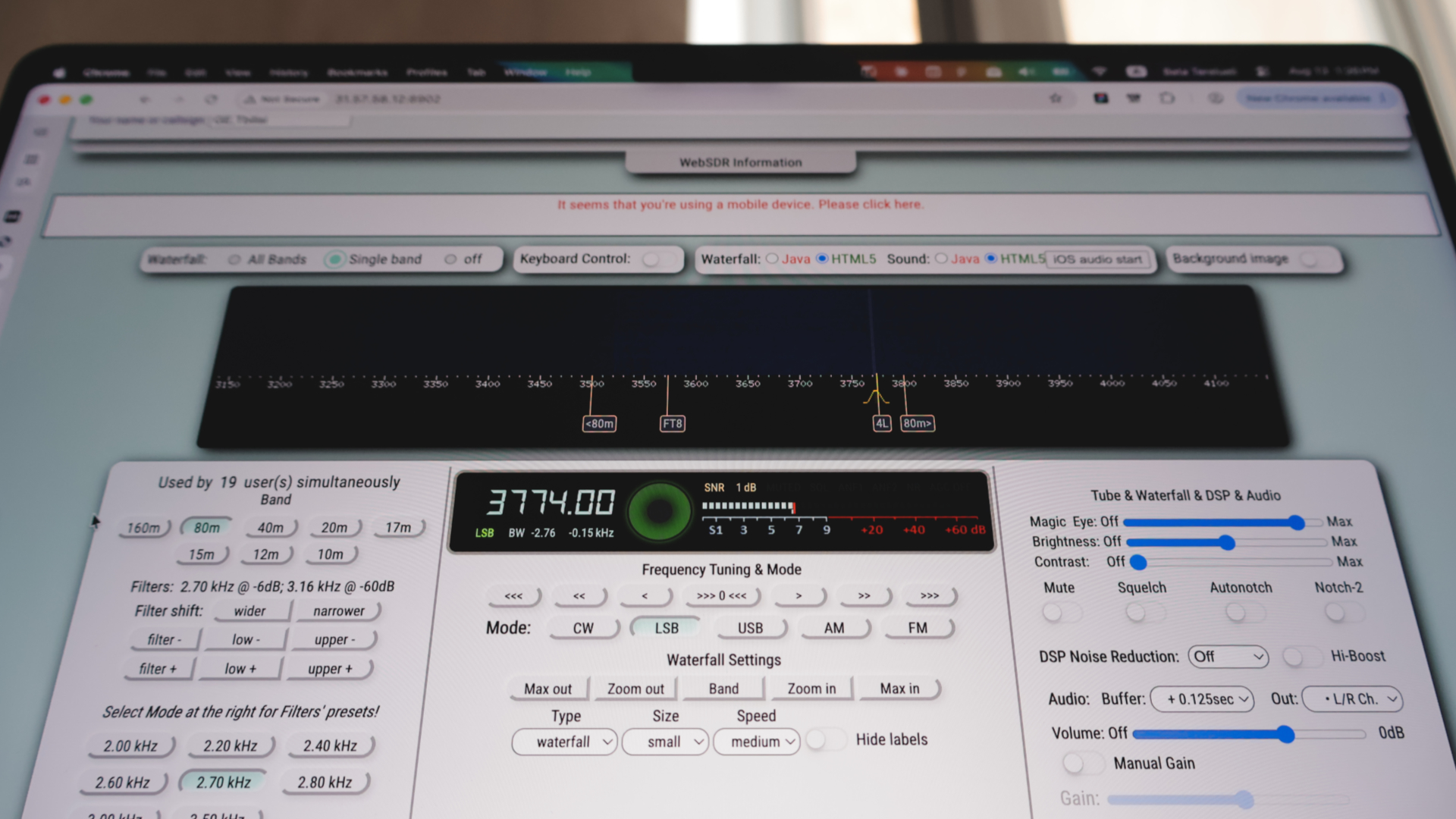
If you've spent any time browsing ham radio forums or YouTube, you've probably run into people talking about SDR. It gets brought up a lot, sometimes with a cheap USB dongle plugged into a laptop, other times with much fancier setups. The idea behind it is actually pretty simple once you break it down, even though the tech underneath can get complicated.
SDR stands for Software Defined Radio. Instead of a traditional radio where most of the signal processing happens in dedicated hardware, an SDR pushes a lot of that work into software running on a computer.
Traditional Radio vs SDR
A traditional radio uses physical components like filters, mixers, and demodulators built specifically for the job they do. If you want to change how the radio processes a signal, you generally need different hardware.
An SDR flips that around. It captures a chunk of radio spectrum as raw data and hands that data off to software, which then does the work of filtering, demodulating, and decoding. Since the heavy lifting happens in software instead of fixed hardware, you can completely change what the radio does just by changing or updating the software.
This is the main reason SDRs have become so popular. One piece of hardware can listen to FM broadcast radio, aircraft, weather satellites, ham bands, and a lot more, all depending on what software you're running.
Most New Radios Are SDR
It's worth being clear about something that trips up a lot of beginners: most new radios, both stationary and handheld, are SDR-based and make use of technology that can be found in a lot of commercial products. The world is no longer analog-based, and just like how microcontrollers revolutionised commercial-grade technology, they also impacted the manufacture and other specifics of radio.
If you use a Baofeng or a Quansheng, or even a Xiegu transceiver, you're making use of SDR, as these devices have digital chips and not analog components.
What the Hardware Actually Does
Even though SDR pushes a lot of work into software, you still need hardware to receive the actual radio signal. At a basic level, the hardware's job is to:
- Pick up radio frequency (RF) signals through an antenna
- Convert that analog RF signal into digital data
- Send that digital data to your computer for processing
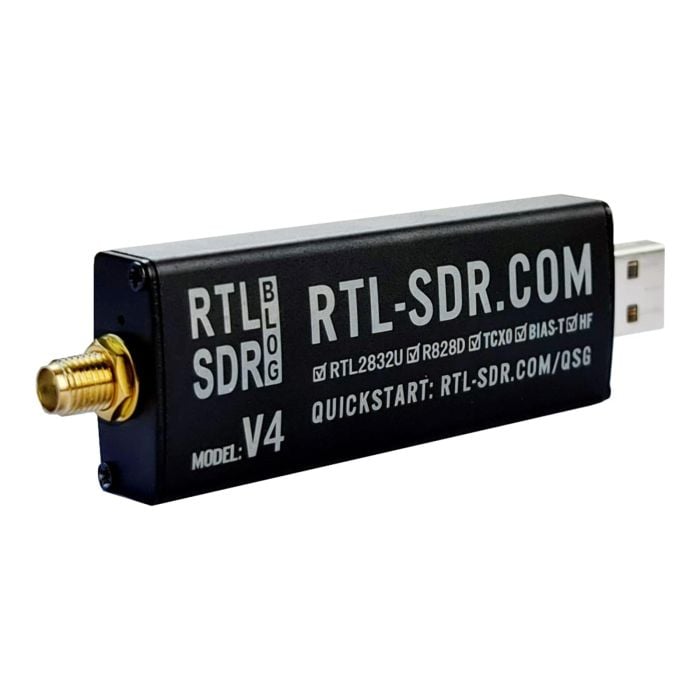
The device that handles this is usually called an SDR receiver or SDR dongle. The most common beginner option is something in the RTL-SDR family, which is a small USB dongle that can be plugged into most devices with USB functionality.
Sample Rate and Bandwidth
Two terms you'll run into quickly with SDR are sample rate and bandwidth.
Sample rate refers to how many data samples per second the SDR hardware captures from the incoming signal. A higher sample rate lets you capture a wider slice of spectrum at once, but it also means more data for your computer to process in real time.
Bandwidth in this context refers to how much of the radio spectrum you can actually see and work with at a given moment. This is directly tied to sample rate, since the wider your sample rate, the more spectrum you can capture.
A simple way to think about it is that your SDR isn't just tuned to one frequency, it's looking at a whole window of frequencies at once, and the size of that window depends on the sample rate.
What You Can Actually Listen To
This is where SDR gets fun for a lot of people. Depending on your hardware and antenna, common beginner activities include:
- Utilizing local WebSDR stations to listen to HF
- Listening to local FM broadcast stations
- Tracking aircraft using ADS-B signals
- Picking up weather satellite images
- Monitoring ham radio activity on VHF and UHF
- Exploring public service and utility frequencies where legally permitted
Since you're not limited to one fixed mode like a traditional radio, SDR turns into a bit of an exploration tool. You can jump between completely different types of signals just by loading different software.
Why SDR Is a Great Entry Point
A lot of people get into radio through SDR specifically because the barrier to entry is so low. You don't need a license to receive, the hardware is cheap, and the software, much of which is free, does most of the technical work for you.
It also builds intuition that carries over if you eventually get licensed and start transmitting. Watching signals on a waterfall, understanding bandwidth, and getting a feel for how different modes look and sound all make the more technical side of radio click faster later on.
Wrapping Up
SDR takes something that used to require specialized, expensive hardware and puts a huge chunk of it into software anyone can run on a regular computer. It's a fantastic introduction to the ham radio hobby, offering a budget entry into the world of radio and enables you to learn the skill of listening.